Cooking grease does not belong in an Austin kitchen drain, not even a little and not even with hot water and the disposal running. A holiday meal puts turkey drippings, gravy and butter on every pan and plate, so the week of Thanksgiving is a good time to change the habit before it turns into a backed-up kitchen line.
Why does grease clog a kitchen drain?
Grease clogs a kitchen drain because fats, oils and grease only partly mix with water. Austin Water explains that once they go down the drain, they thicken, stick to the inside of the pipe and form a deposit that grows a little every time more greasy water follows.
The pipe does not have to be cold for this to happen. Many cooking oils firm up as they cool in the line, and the oils that stay liquid still bind to other grease and to anything else caught in the pipe, such as wipes.
Restaurants in Austin have grease traps to catch this before it reaches the sewer. Most homes do not have one, which is why Austin Water says disposing of grease the right way at home matters so much.
What counts as grease on a holiday menu?
Grease is more than the fat left in the roasting pan. Austin Water lists meat fats, sauces and gravy, cooking oils, butter and margarine, mayonnaise, nut butters, salad dressing and even yogurt as sources of fats, oils and grease.
That covers most of a Thanksgiving table. The turkey drippings, the gravy boat, the butter on the rolls and the dressing on the salad all leave grease on plates and pans that end up at the sink.
Does the garbage disposal take care of it?
A garbage disposal does not take care of grease. Austin Water calls this a myth: the disposal only grinds greasy, fatty food into smaller pieces, and smaller pieces cling to the pipe more easily.
The City takes this seriously enough that food grinders and disposals have been banned in commercial kitchens in the Austin Water service area since 2008. Your home disposal is still fine for small scraps, but it is not a way to get rid of grease.
Will hot water and dish soap wash it through?
Hot water and dish soap will not wash grease through for good. According to Austin Water, they may only push the grease further down the line, where it cools and settles, and a blockage further down is often harder to clear than one under the sink.
What should you do with holiday grease instead?
The fix is simple and costs almost nothing. Austin Water recommends three steps for small amounts of grease:
- Let the grease cool in the pan.
- Pour or scrape it into a container with a lid, like an empty coffee can or pasta sauce jar.
- Seal it and put it in the trash.
Before washing, wipe pots, pans, plates and utensils with a paper towel and throw the towel away. Scrape food scraps into the trash, and keep a strainer in the sink to catch what slips past. Austin Water also says grease can be mixed with kitty litter and double bagged before it goes in the trash.
What about turkey fryer oil?
Turkey fryer oil is too much for a coffee can, and the City has a place for it. Austin Resource Recovery's Recycle and Reuse Drop-off Center at 2514 Business Center Drive takes used cooking oil by appointment, in containers of 5 gallons or smaller. The collected oil goes to a vendor that turns it into biodiesel.
If you are an Austin Resource Recovery residential customer, you can also schedule an on-demand household hazardous waste pick-up that includes cooking oil, up to three times a year, with a 30-gallon limit per pick-up. Details are on Austin Water's Grease Blob page.
Does a little grease really matter?
A little grease matters because everyone adds a little. Austin Water estimates that if every person in Austin poured just one teaspoon of grease down the drain, it would add up to nearly 1,275 gallons in the sewer.
That grease does not stay in one place. Austin Water says a buildup of fats, oils and grease is a common cause of sewer overflows, and when a line is blocked, wastewater can back up and come out through a cleanout or a drain inside a home. The U.S. Environmental Protection Agency makes the same point: grease from homes and businesses can partly block or fully clog sewer lines.
How do you know a kitchen drain is already in trouble?
A kitchen drain is in trouble when it starts giving you warnings. Watch for these, especially in the days after a big meal:
- The sink drains slowly, even after you run the disposal.
- The same clog keeps coming back.
- The drain gurgles or smells like sewage.
- Water comes up in a tub or shower when you run the dishwasher or flush.
- More than one drain backs up at the same time.
One slow kitchen sink is usually a clog in that branch line. Several drains backing up together often point to the main line, and that is when it is time to stop using water and call.
When should you call a plumber?
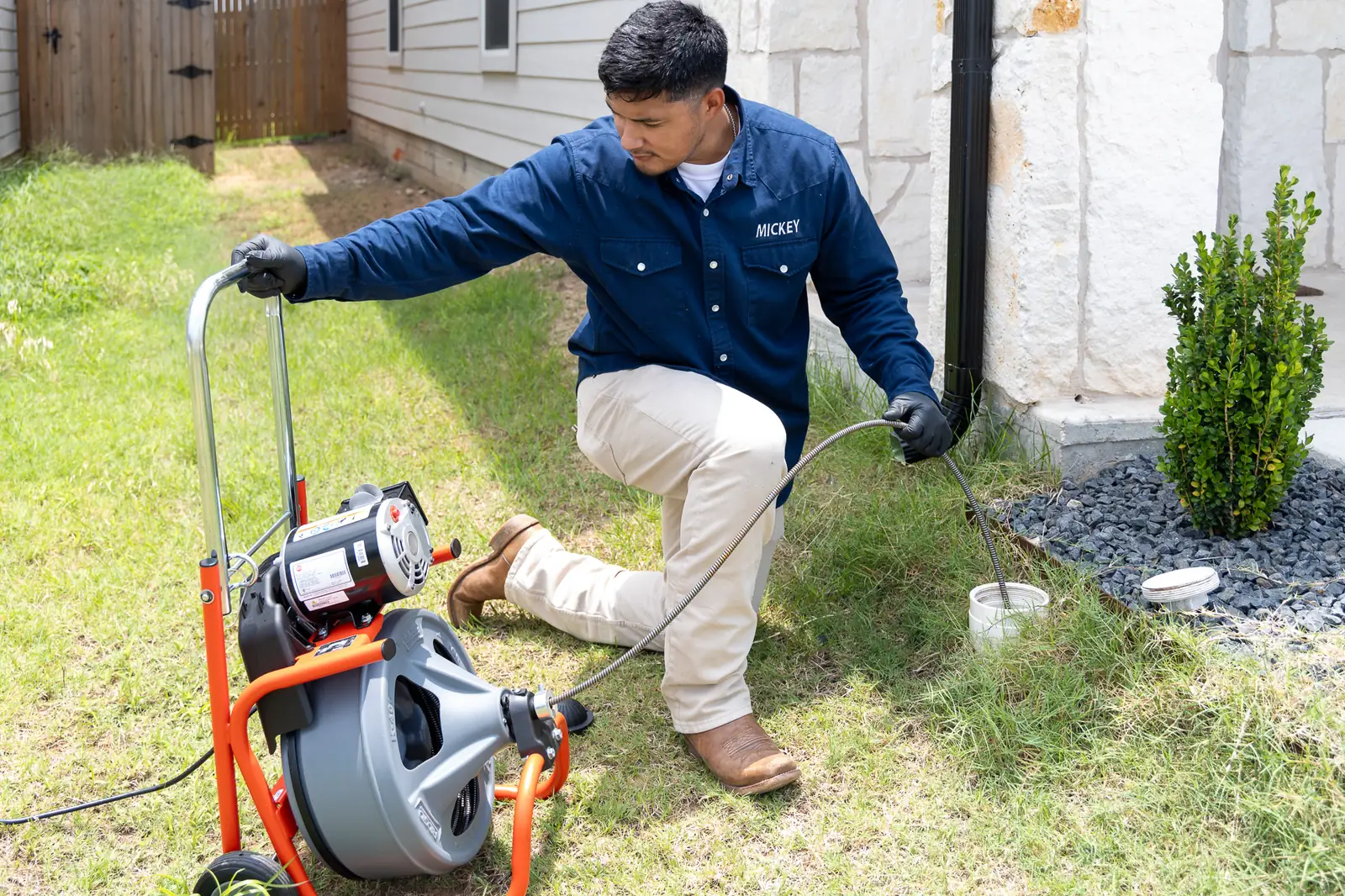
Call a plumber when a plunger and a strainer have not fixed it, or when water is backing up anywhere it should not be. Our sewer and drain services clear kitchen sink and disposal clogs and use hydro jetting to wash grease buildup out of the line. If the clog keeps coming back, a camera inspection shows you what is in the pipe before you decide on a fix.
A backup on Thanksgiving night does not have to wait until Monday. Our emergency plumbing line answers 24/7 at 512-828-3835. Ultimate Plumber is owned by Mickey Pesina, Texas Master Plumber M-46456, and serves homes across Austin and nearby towns. You can also send us a message and we will get back to you.